Climb a real 5,000m+ summit. In three days, from Lijiang.
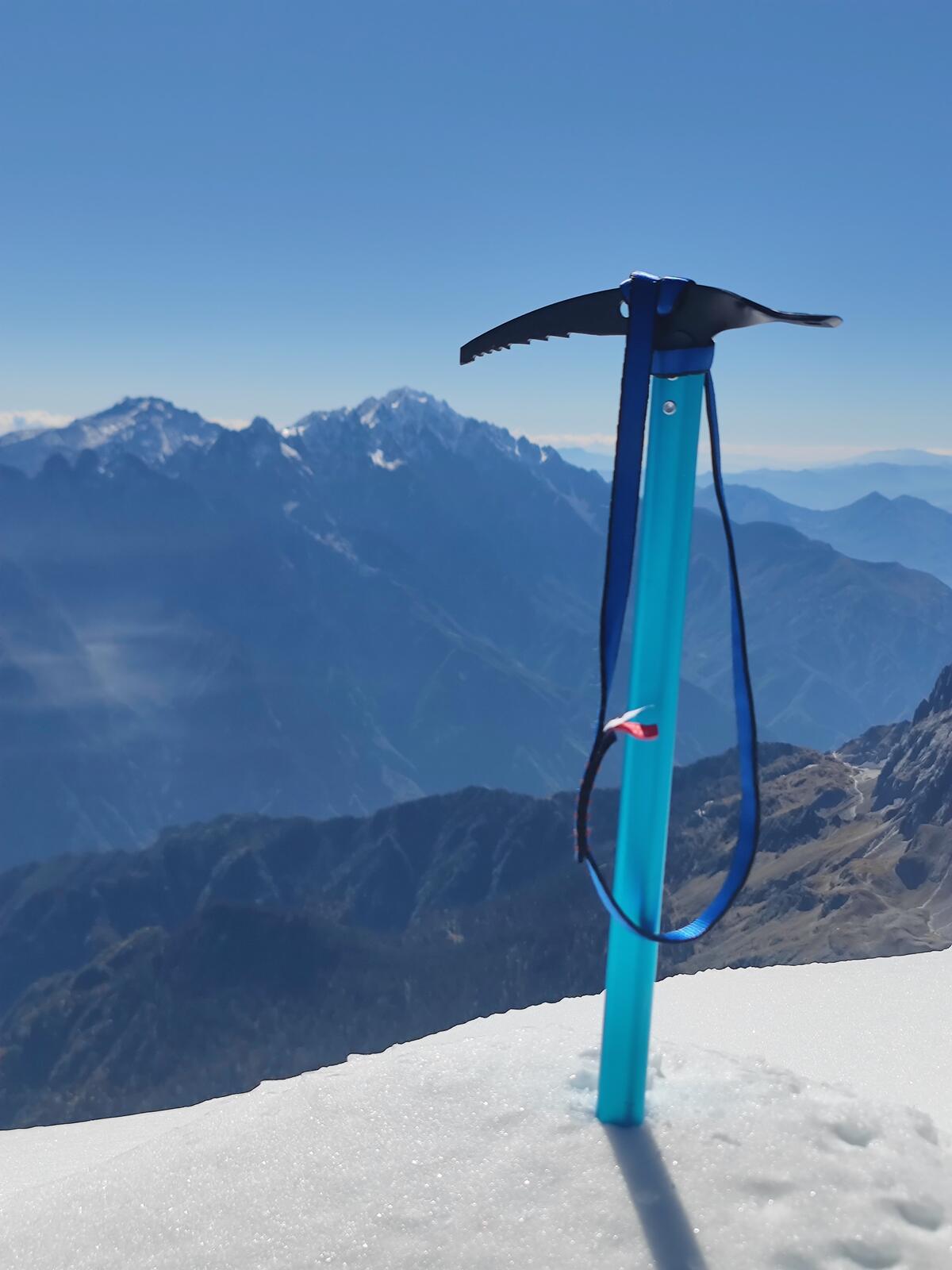
Crampons, an ice axe, a night ascent, and a genuine 5,396m top — Haba Snow Mountain is China's classic entry-level ascent. No technical climbing experience required. Just a fit body, strong legs for a long uphill day, and the will to leave camp at 3am for it.
The narrow, useful middle ground of mountaineering.
Most "beginner mountaineering" trips in China fall into one of two camps: guided walk-ups with no technical terrain, or multi-week expeditions that quietly assume you've already climbed a 5,000m peak. Haba sits in the gap between them — an actual glaciated summit, climbed with crampons and an ice axe, short enough and supported enough that a reasonably fit first-timer can do it in a long weekend, with a personal guide beside you for the summit push.
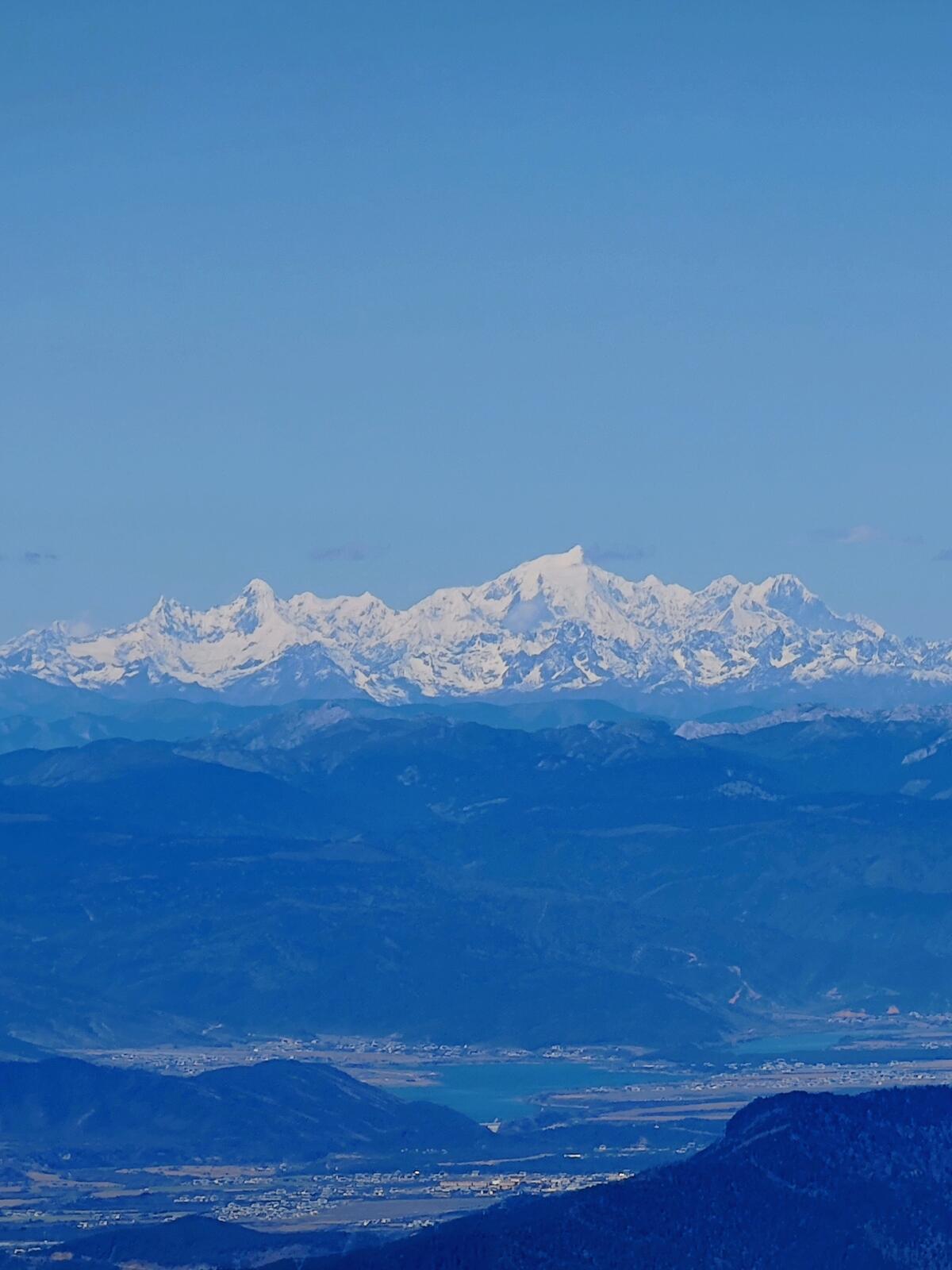
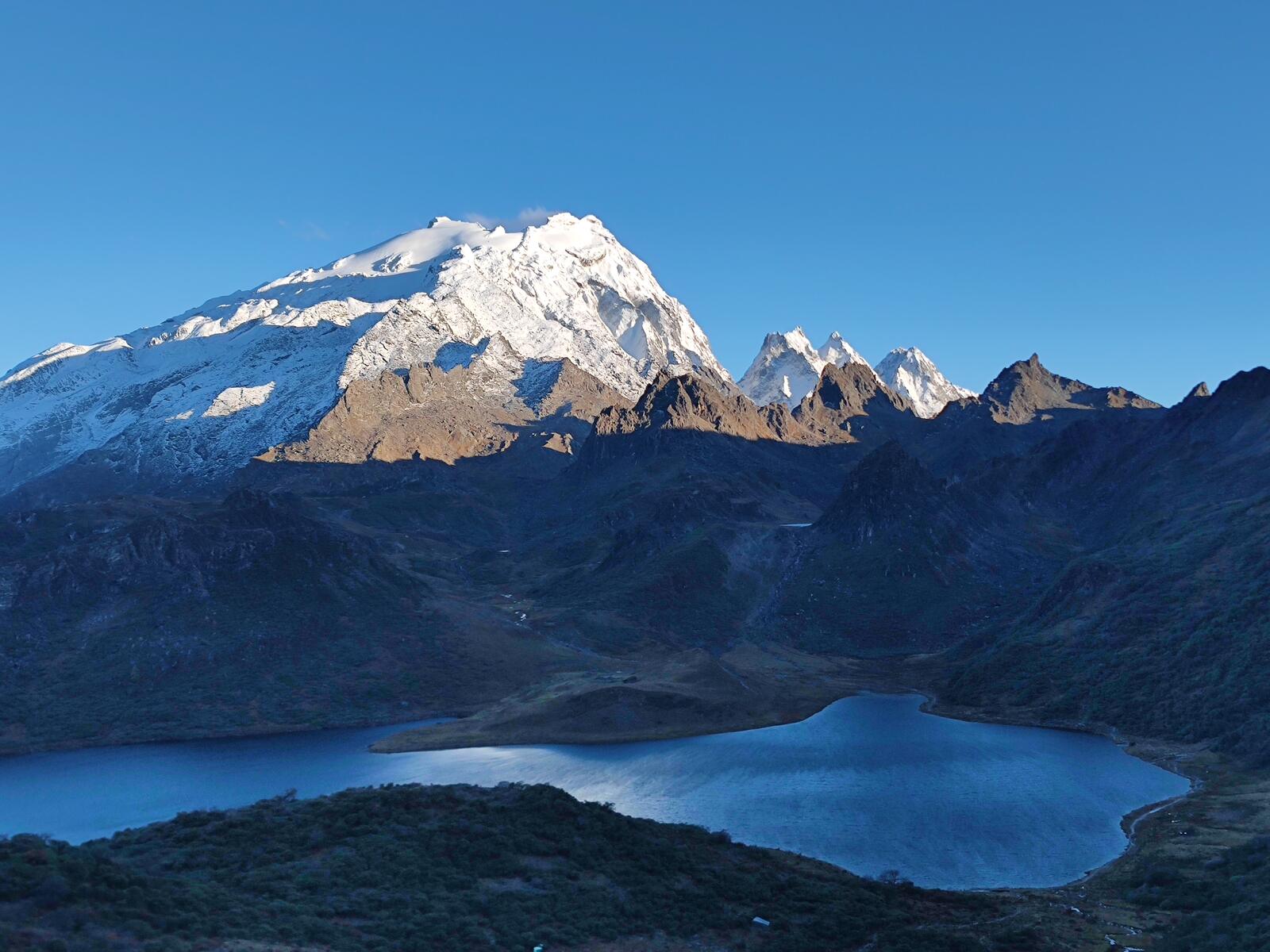
And on a clear day, the summit hands you two of Yunnan's most recognizable mountains in the same view.
5,396m
Summit elevation
3d / 2n
Total duration
1:1
Personal guide, summit day
1+
Minimum group size
Jade Dragon Snow Mountain
玉龙雪山 · 5,596m · south
Kawa Karpo
梅里雪山 · 6,740m · north
The itinerary
Three days, told straight.
No padding, no filler activities. Here's exactly what happens each day — including the parts that are genuinely hard.
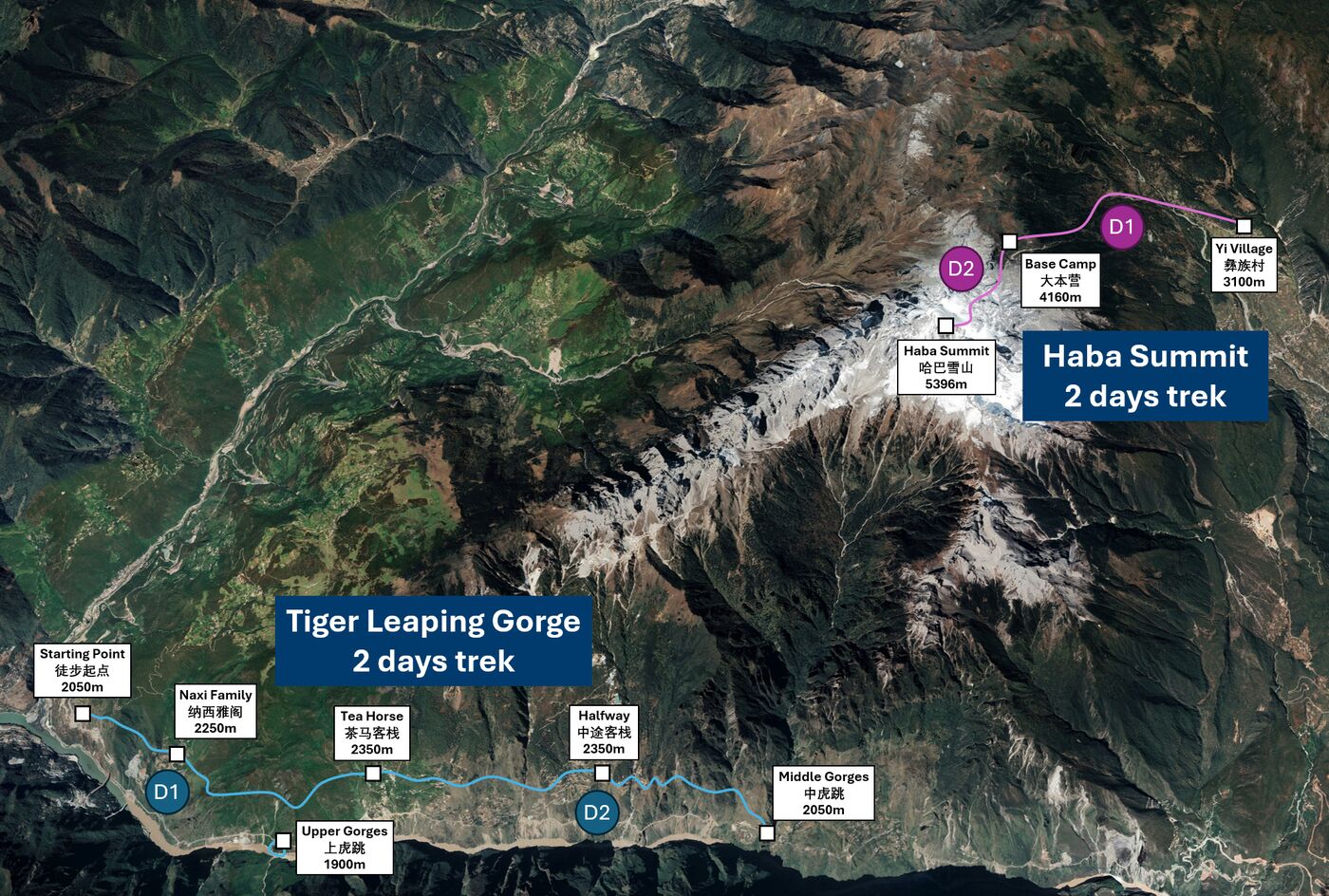
Yi Village → Base Camp → Summit — and how it sits next to Tiger Leaping Gorge, just down the same mountain.
DAY01
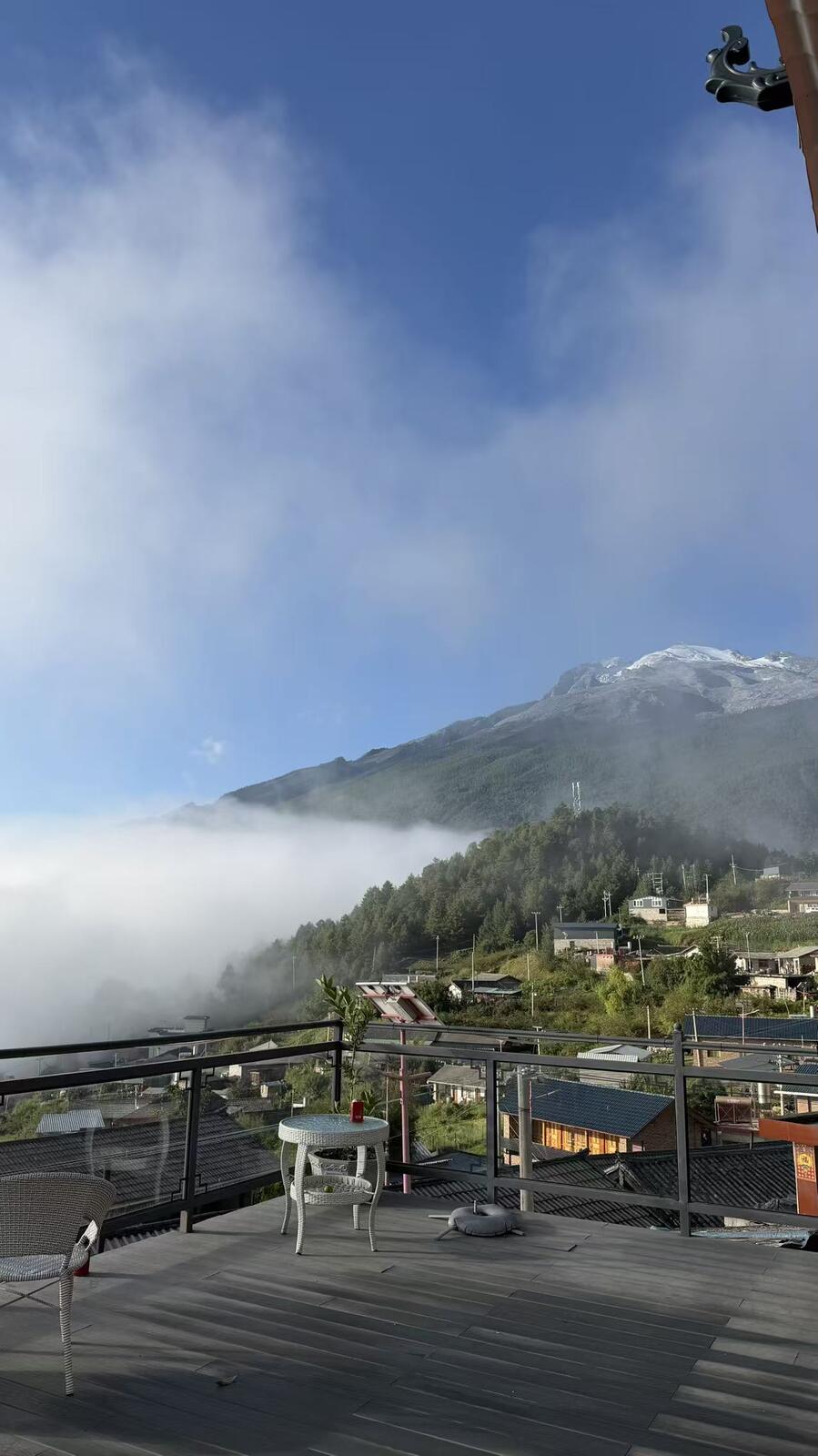
Lijiang → Haba Yi Village
3,100m 4h transfer · no hike
Meet at 13:00 at a central Lijiang meeting point. A four-hour transfer brings you to Haba Yi Village — the last stop with real beds and hot food before the mountain. Dinner at the guesthouse, and a chance to meet your group.
OvernightHaba Yi Village
Elevation3,100m
DAY02
Haba Yi Village → Base Camp
3,100m → 4,160m · +1,060m 3–5h hike
Leave the village at 08:00 and climb steadily through forest, crossing creeks, up to Base Camp at 4,160m. A mule carries your gear at no extra cost — and for 300 RMB, it can carry you too, if you'd rather save your legs for summit day. You'll be climbing alongside other clients of the same local climbing club.
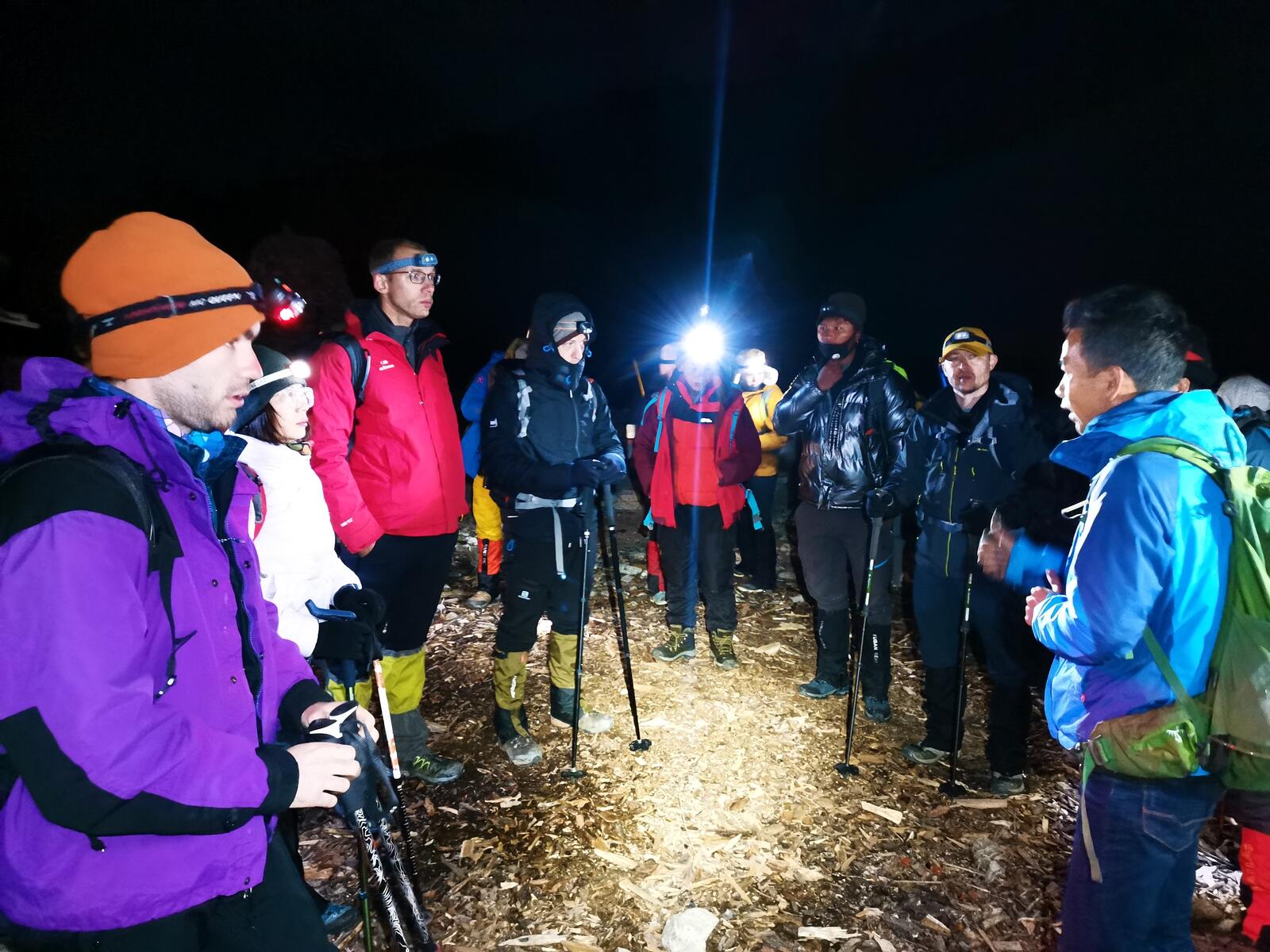
Base Camp is a wooden house with bunk beds, set high on the mountain, with wifi generally available. Accommodation is not mixed: men and women are housed separately. That evening: a hot dinner, a safety briefing, and an introduction to the guide who will take you to the summit individually the next morning.
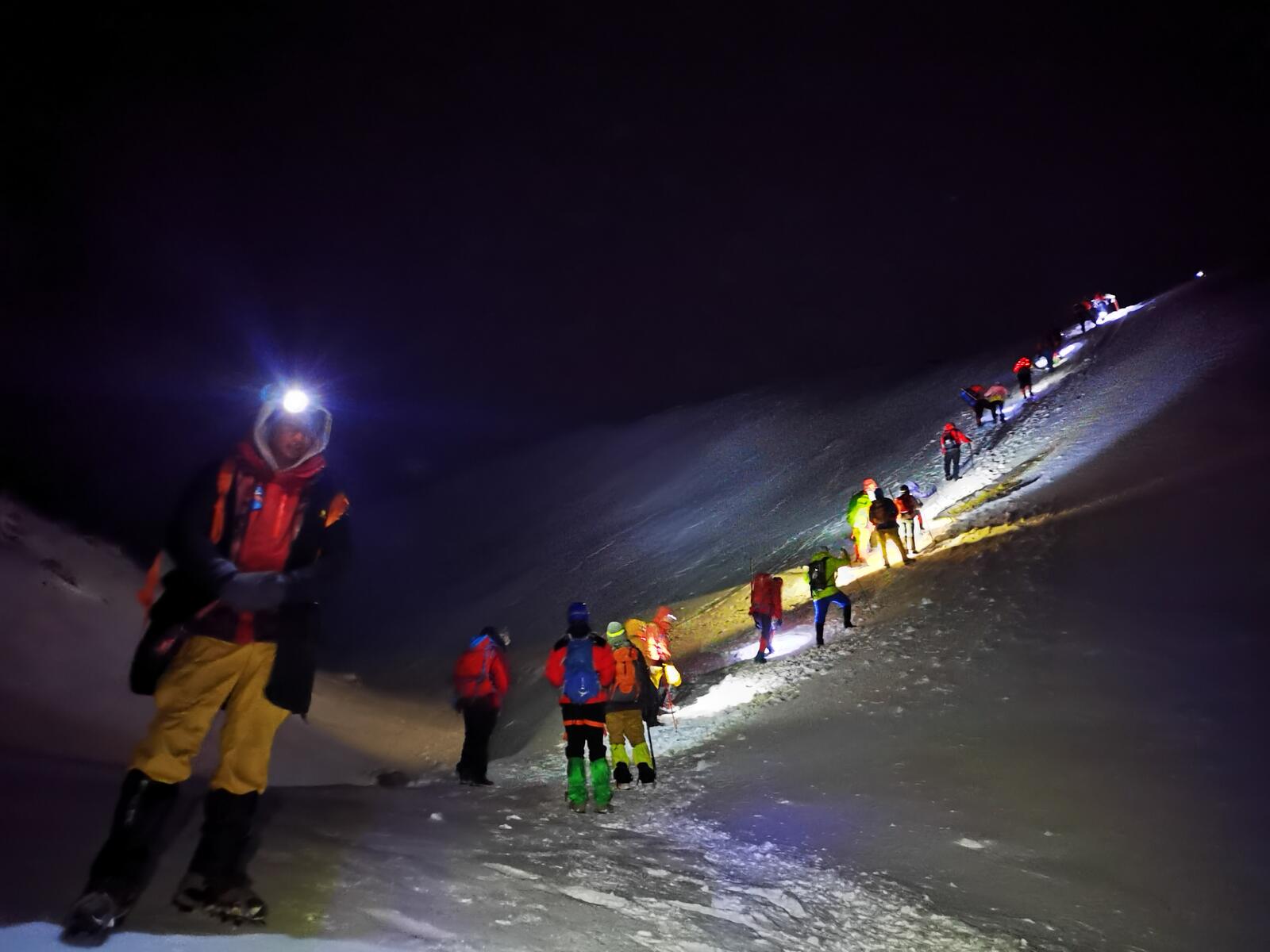
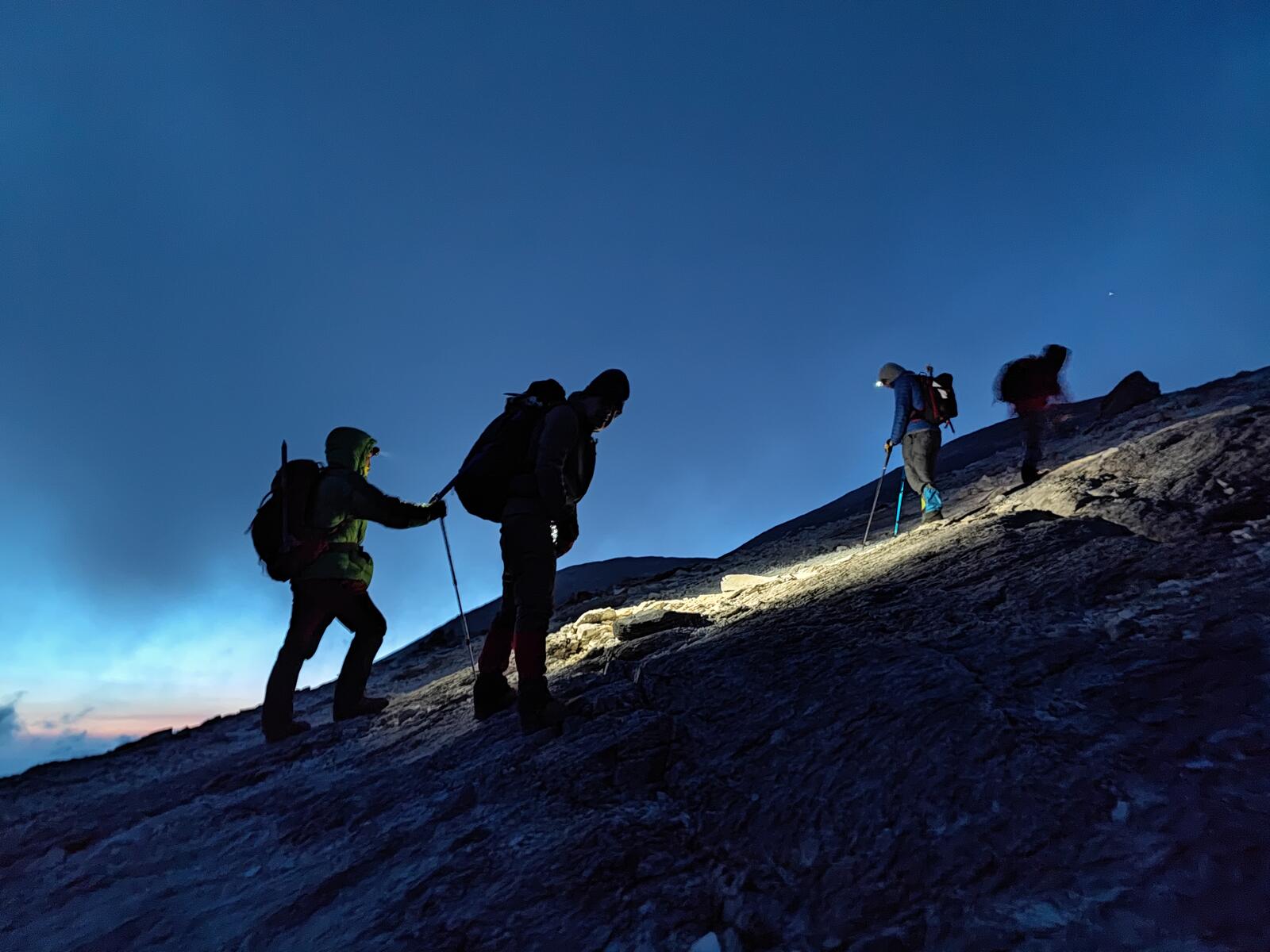
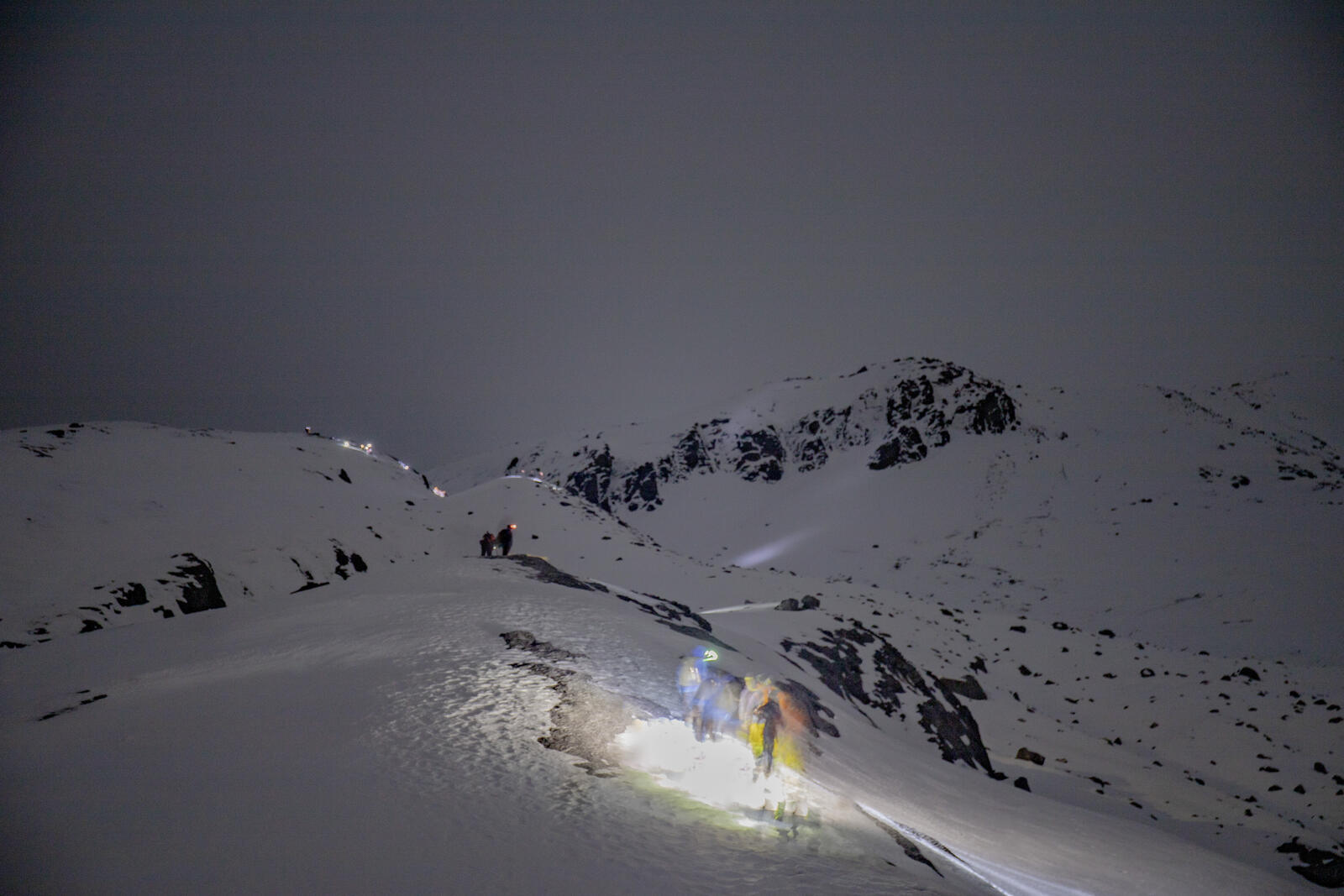
This is a very long day — about 10 hours of hiking in total. Wake-up is 02:00 — coffee, breakfast, and you're moving by 03:00, headlamp on, crampons stowed in your bag until the snowline (generally around 4,900m, sometimes lower). For safety, you need to reach that point before 07:00, or your guide will turn you back — the operator's actual safety margin at work, not a formality.
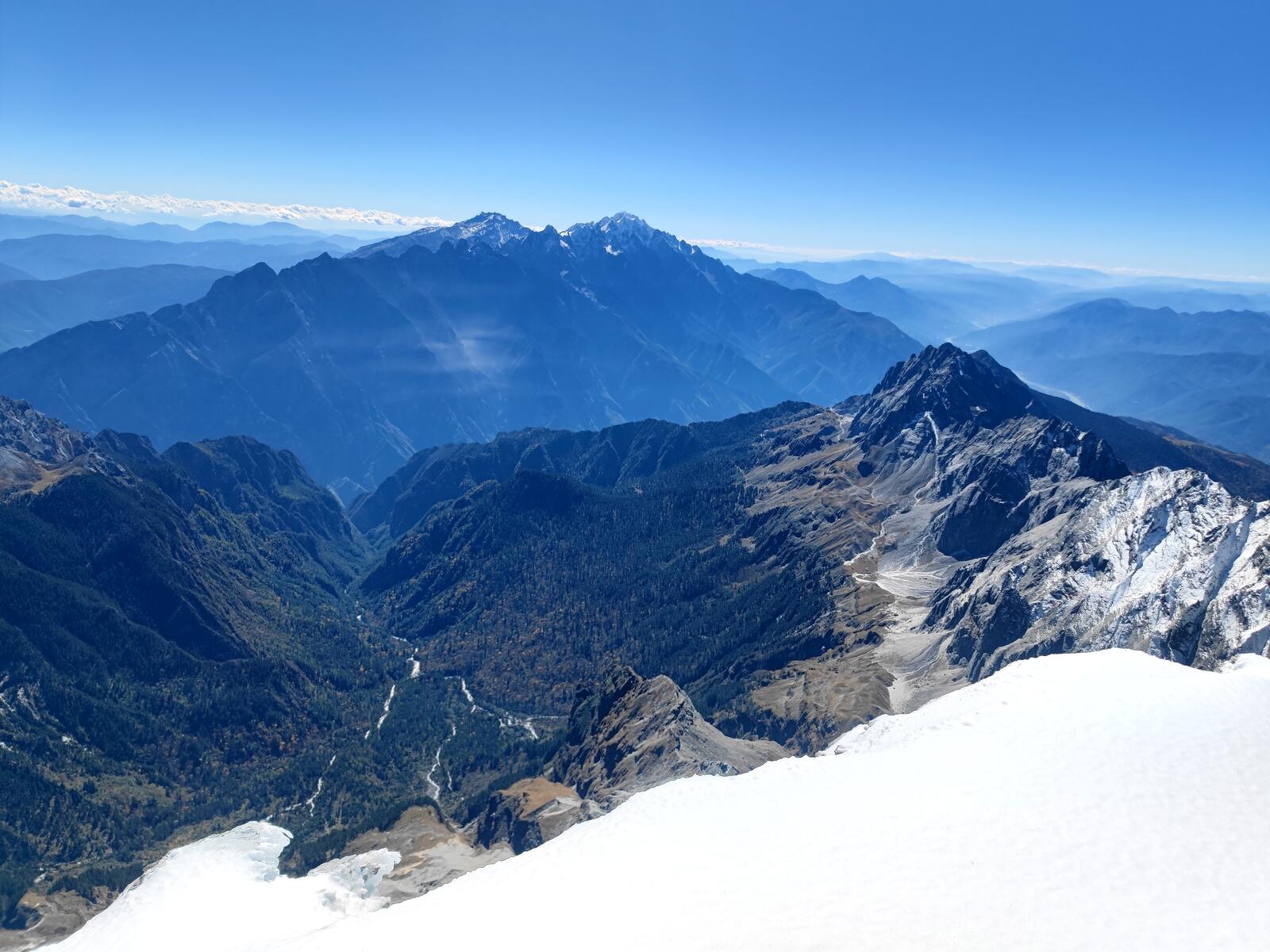
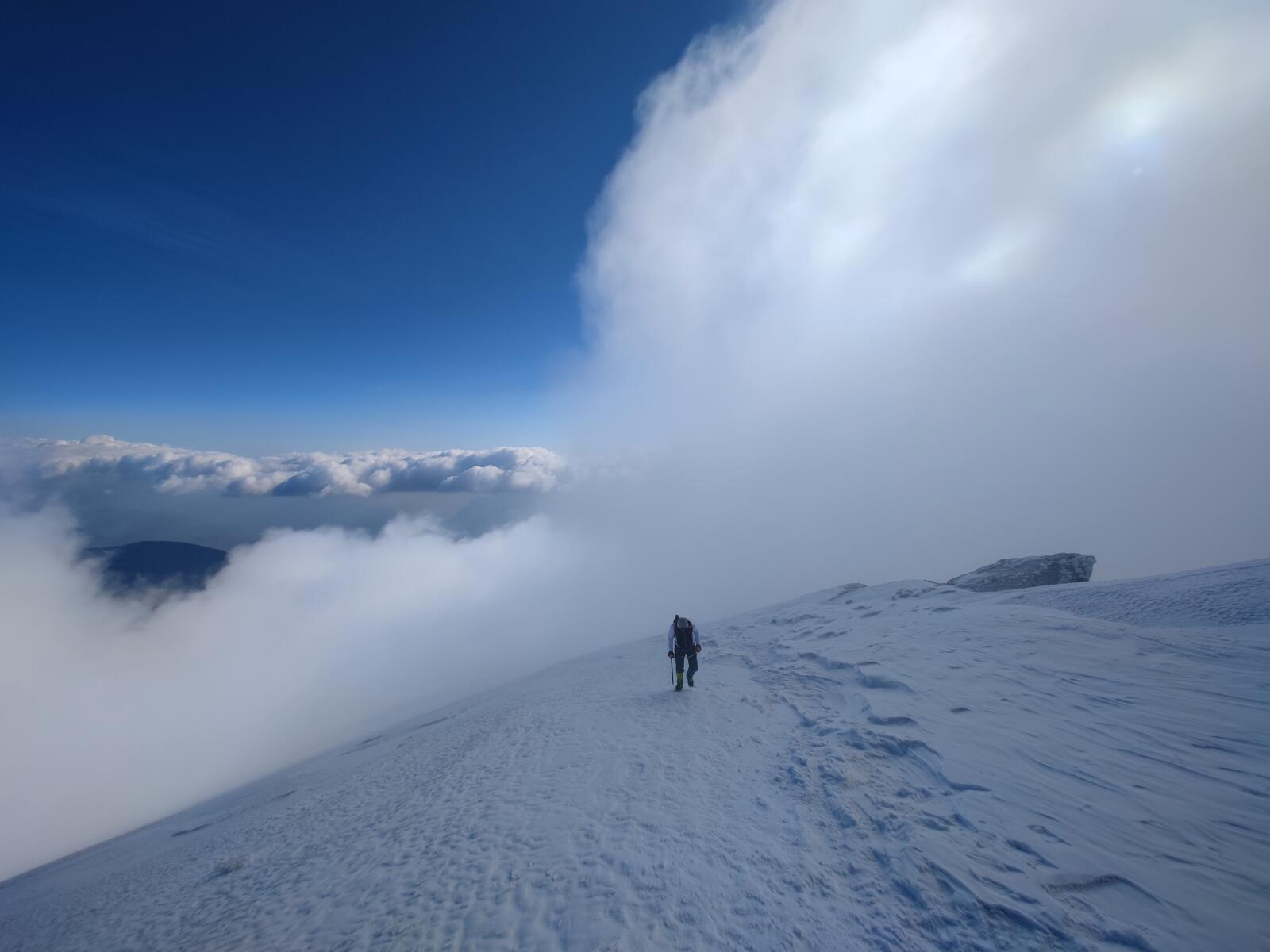
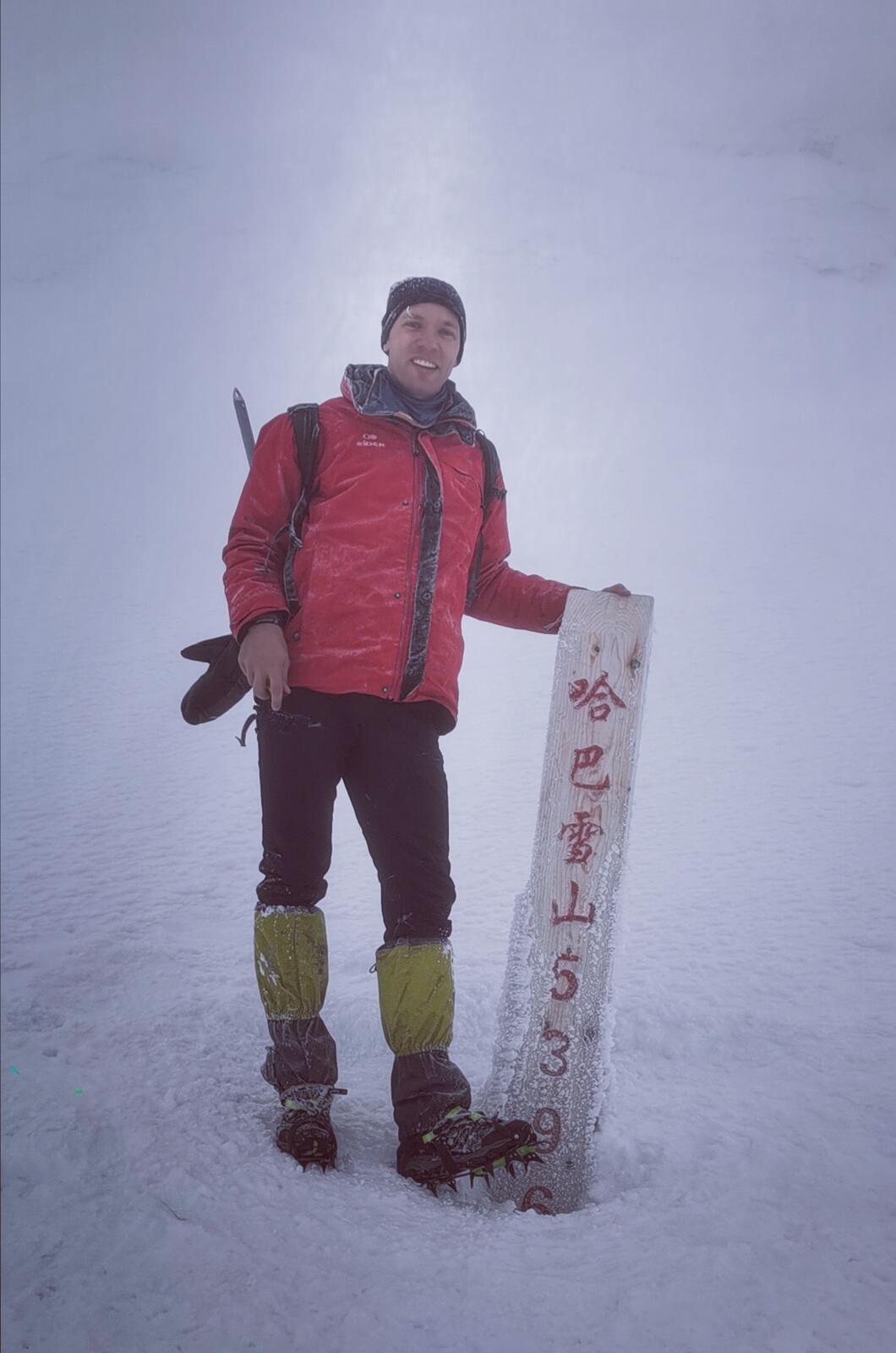
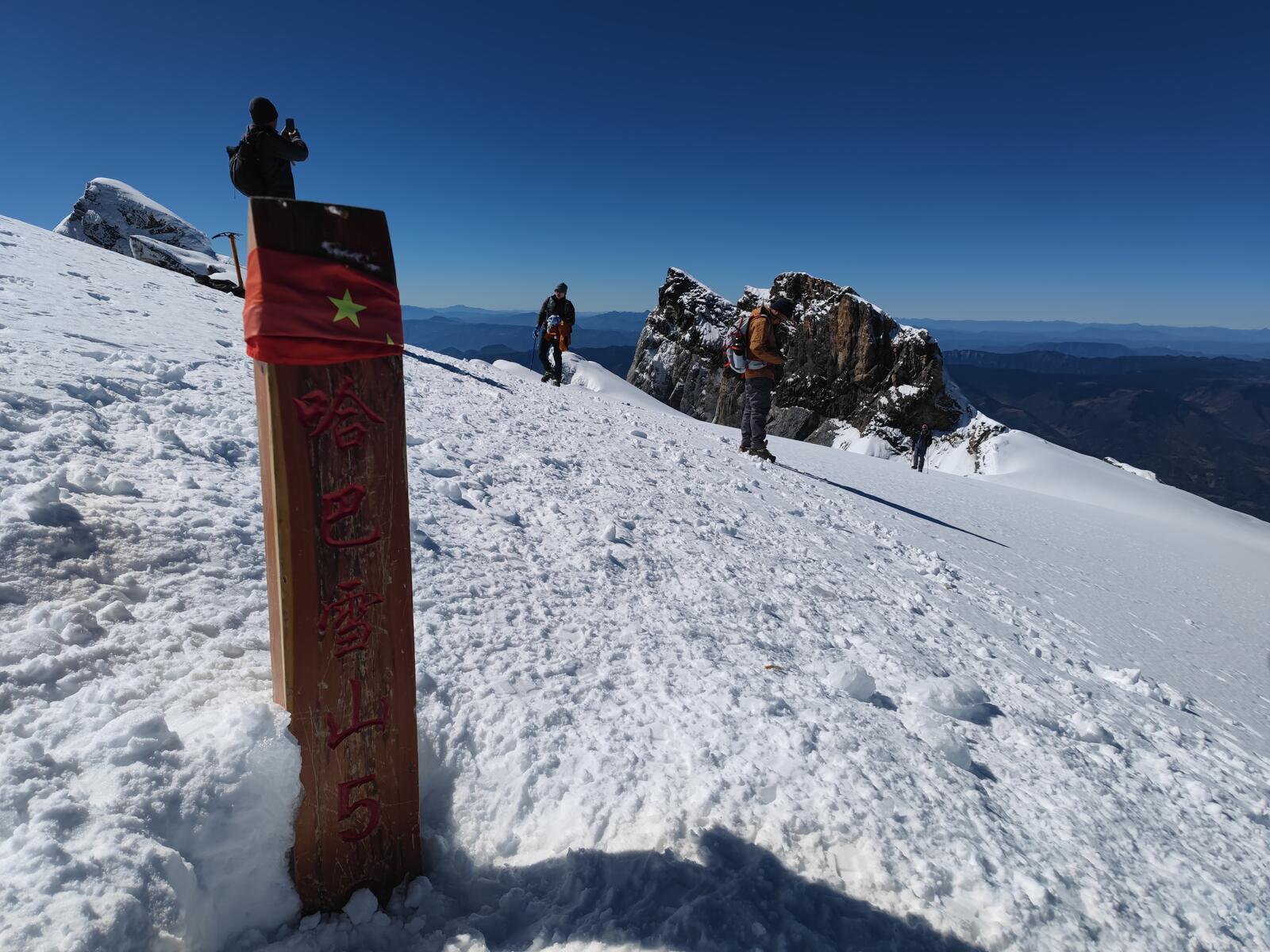
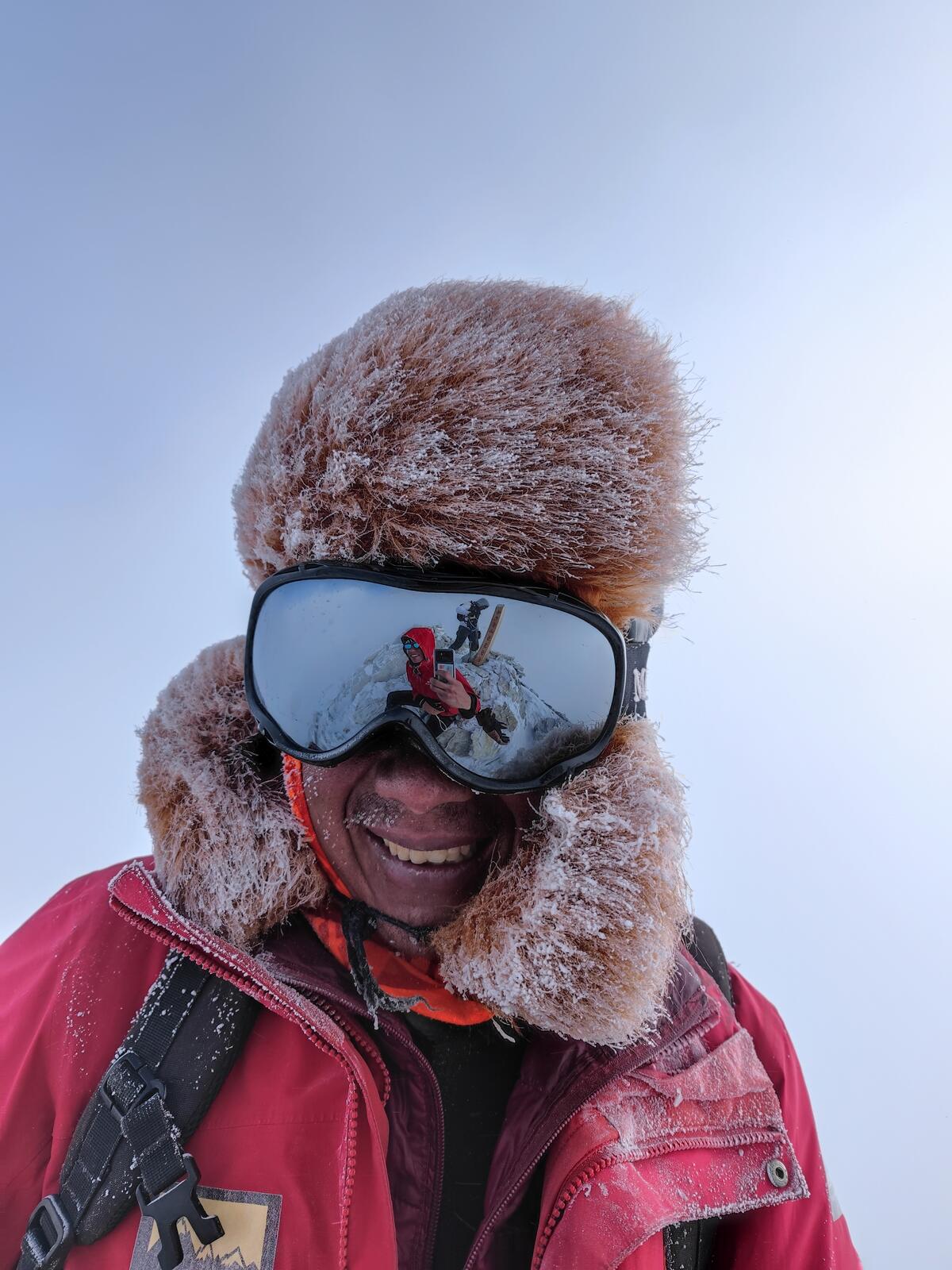
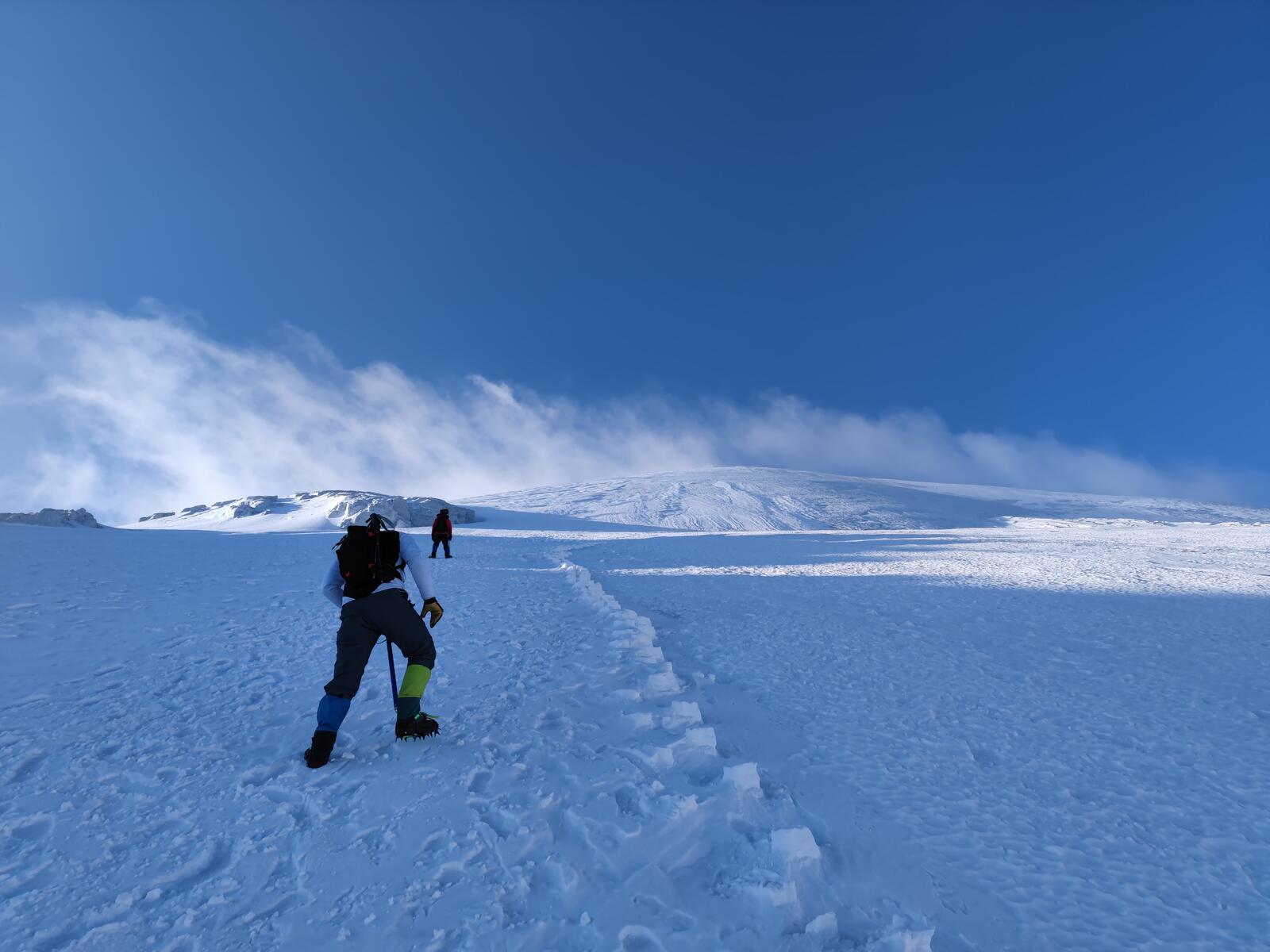
From there, crampons on, it's a steady push to the top. Most climbers in reasonable shape reach the summit between 07:00 and 09:00 — there's no need to rush ahead of that; arriving while it's still dark isn't much of a reward, so pace yourself and enjoy the climb. 10:00 is the hard cutoff. If the weather holds, this is the payoff: sunrise from above 5,000m, and — if it's clear — Jade Dragon Snow Mountain (5,596m) and Kawa Karpo (6,740m, Yunnan's highest peak, on the Tibet border) on the horizon. A 200 RMB tip to your personal guide is expected on a successful summit.
Then a long way down begins: Base Camp for a rest, on to Haba Yi Village where your bag — and a bed — is waiting. A horse can carry you down instead of walking, for 300 RMB — book it a day ahead. Dinner at the guesthouse, then a four-hour transfer takes you back to Lijiang.
Wake-up02:00
Departure~03:00
Summit cutoff10:00
03:00 — briefingAscent — headlamps05:30 — first lightBreaking the cloud line
绝望坡 — the "Slope of Despair"
It's the locals' nickname for one of the steeper, more grinding sections of the summit push — a long, open snow slope between roughly 4,900m and 5,200m, where the top always looks closer than it is. Tough, not technical. The kind of detail you'd only know if you'd actually been there.
"Some of those who set out on Day 3 don't reach the summit. That's the honest reality of mountain weather — not a flaw in the trip."
On the safety cutoffs, Day 3
Pricing
One price. No quote requests.
Per person, and it gets cheaper the more of you there are — but there's no minimum. You can book this solo.
Group size
Price per person
1–2 people
¥2,780
3–4 people
¥2,580
5–6 people
¥2,380
7+ people
¥2,280
Included
Transport, Lijiang ↔ Haba Yi Village round trip
Guesthouse night, Haba Yi Village
2 breakfasts + 3 dinners
Base Camp accommodation (wooden house with bunk beds, wifi generally available — not mixed, men and women separated)
Mule to carry your gear, to and from Base Camp (Day 2 & 3)
Guide-provided crampons, ice axe & headlamp
Fast-drying thermal clothing, offered: leggings and a base layer top
Other equipment can be borrowed for free
Safety briefing & English explanations throughout
1:1 personal guide, summit day
Not included
Lunch — bring your own snacks/food
200 RMB customary guide tip, on successful summit
Riding the mule to Base Camp (Day 2) or the horse down (Day 3) instead of walking — 300 RMB each way, paid on-site
High-top hiking boots (ankle support)
Who's behind this
I'm a Frenchman living in Yunnan. I've climbed Haba myself three times, in three different seasons, as a client — not a guide. Every account and photo on this page is from those climbs.
The trip itself is run by an established local climbing club based in Lijiang: real mountain guides, real base camp infrastructure, the safety-cutoff discipline described here. I'm not a guide myself — what I can tell you honestly is what these three days actually feel like, across very different conditions, because I've done them more than once.
I also co-run a France-based trekking agency organizing longer adventure treks across Yunnan, Sichuan, Tibet, Qinghai, Gansu and Inner Mongolia, with English-speaking guides — get in touch if Haba is the start of a bigger trip.
How it's actually run
The safety margins aren't marketing copy.
07:00
Reach 4,900m before 07:00The checkpoint that catches a slow start or worsening weather early — before it becomes a rescue.
10:00
Hard summit cutoffLater than this, you're turned around regardless of how close you are.
1:1
Personal guide per climberIntroduced the evening before, on the mountain, not a stranger on summit morning.
FAQ
Before you book.
No technical climbing background is required. You do need to be a genuinely fit hiker — comfortable with a long, steady uphill day and multiple hours at altitude. The guide provides the crampons and ice axe, and teaches you how to use them; you don't need to already know how.
Sturdy hiking boots with ankle support are essential — you'll need them to fit the crampons and to stay protected from cold and damp. Warm clothing matters too, but it can be borrowed locally if needed, along with gloves, hats and other accessories. A good pair of trousers and a shell jacket can also be borrowed, though you'll always be more comfortable in your own gear. Bring a small daypack for the hike. The headlamp, crampons and ice axe are provided in every case — our crampons go up to EU size 46; if your feet are bigger than that, please let us know in advance.
There's phone signal in the village and at the summit. In between there's generally no mobile signal, but Base Camp generally has wifi and power outlets to charge phones and other devices — though they can work poorly in bad weather or when the camp is crowded.
Guides make the go/no-go call based on real-time conditions. The safety checkpoints exist specifically so a slow start or worsening weather gets caught early rather than turning into a rescue. Some of those who set out on Day 3 don't reach the summit — that's the honest reality of mountain weather, not a flaw in the trip.
Base Camp sits at 4,160m and the summit at 5,396m, so yes — altitude is a real factor, which is part of why Day 2 is a dedicated, unhurried approach day. Any previous altitude acclimatization helps — even a few days in the Shangri-La area beforehand can make a real difference. Anyone with health concerns should consult a doctor before booking.
No — a second night at high elevation is often when acute altitude sickness actually hits, so it's safer to descend the same day. If you're too tired for the walk down, a mule can carry you to the village instead. If what you're after is a longer trip around Haba with several nights in the mountains, get in touch — that can be arranged as a tailor-made trip for a group of hikers.
Lodging is in a wooden house with bunk beds, with wifi generally available. It's not mixed — men and women are housed separately.
Yes. There's no minimum group size — solo travelers are matched into the operator's guide system like any other group.
Day 2, the hike up to Base Camp, is done together with the group. Day 3 — summit day — you're on your own pace with your private guide: your success isn't tied to the fitness or speed of anyone else in the group. If you're climbing with friends, you're welcome to stay together, each with your own guide.
In good weather, 70–90% of climbers who attempt the summit push reach the top. In extreme conditions — strong winds, heavy rain or snow — that can drop to 0%. The safety cutoffs on Day 3 exist precisely to make that call before it becomes dangerous, not after.
The climb runs year-round, but autumn and spring generally offer the best chances of good weather. Winter brings strong winds; summer tends to be rainy and cloudy. It's also worth avoiding China's national holiday weeks — October 1–7 and May 1–5 — when the mountain gets much busier.
About a month ahead is typically comfortable, but last-minute bookings are possible too. There's no real advantage to booking far in advance — local regulations can change, so booking closer to your date is often simpler.
The trip and guiding are in Chinese, but your safety briefing is provided with an English translation, and guides are used to communicating with international climbers using offline translation apps when needed.
Local guides don't speak English, but we'll make sure yours is comfortable using his phone for quick, easy translation along the way. If you'd rather have an English-speaking guide for the whole trip, that can be arranged — but it costs more, is only available for groups, and works much better folded into a longer itinerary than bolted onto these three days alone. Get in touch if that's what you're after.
Yes — it's just down the mountain, on the same side as Haba. Many climbers add it either before the climb, as a warm-up hike, or after, as a more relaxed walk once the summit push is behind them. Pick-up can be arranged accordingly to save on transport time.
The flanks of Haba Mountain are home to a real mosaic of ethnic groups. As part of the wider Shangri-La region, there's a strong Tibetan presence, especially further down the valley near Tiger Leaping Gorge. In Haba village and the surrounding area itself, you'll encounter Hui, Lisu, Naxi and Yi communities — which is also where the name Haba Yi Village comes from.
Yes — get in touch if you're interested in other private treks in Yunnan Province beyond this one. These all come with an English-speaking guide.
No. This is a personalized trip, and we provide personal guidance and support both before and during your journey. Some Chinese-speaking local agencies may offer lower prices, but the level of support and ease of communication will be different.
By WeChat Pay or Alipay. If you already live in China, you'll have these set up already; if it's your first trip here, you'll need one or the other anyway for day-to-day spending, so it's worth setting up before you arrive.
Get in touch
Ready to see it for yourself?
Tell me your dates and group size — I'll confirm availability and next steps directly. No account, no payment portal, just a straight answer.